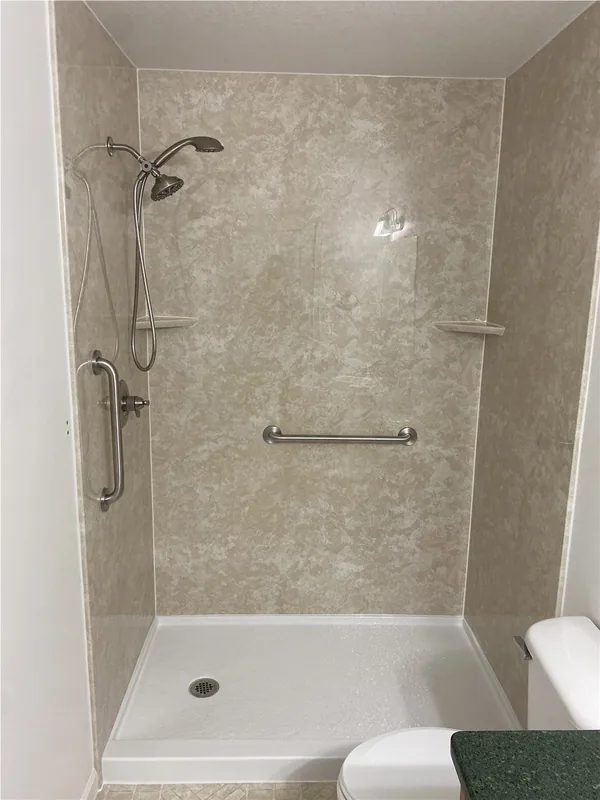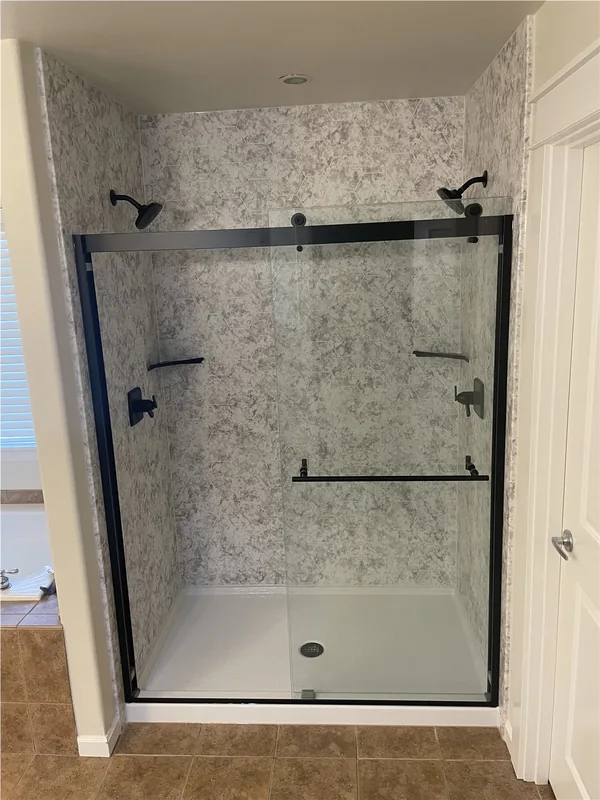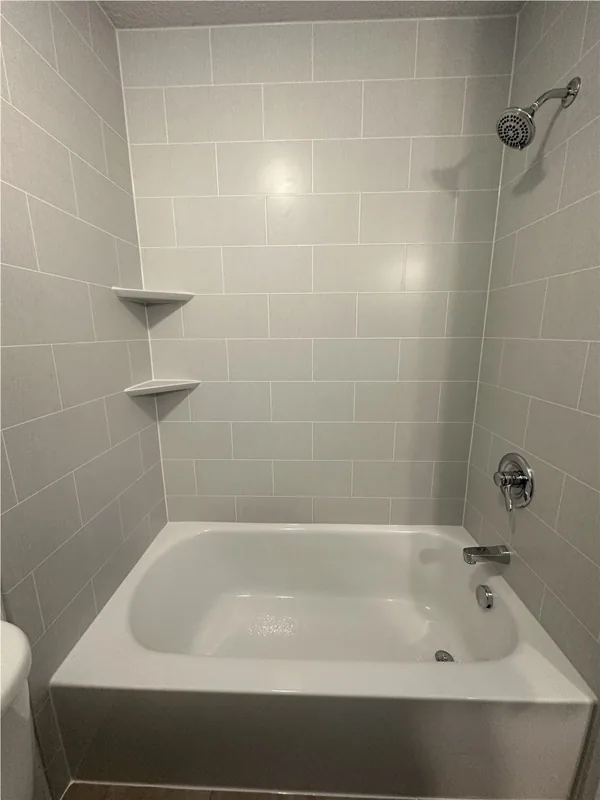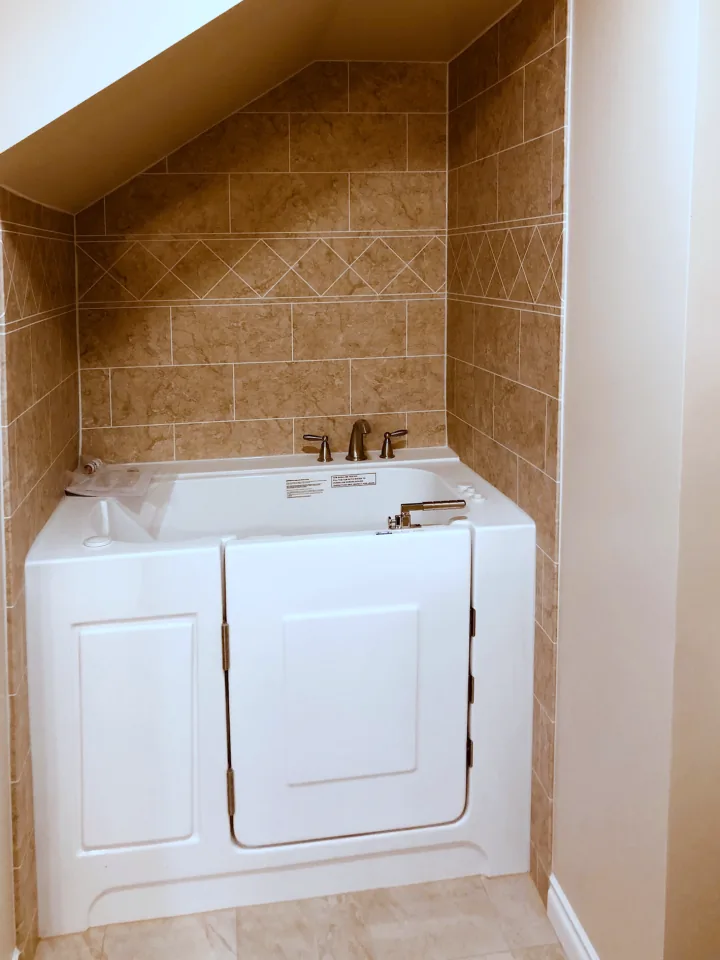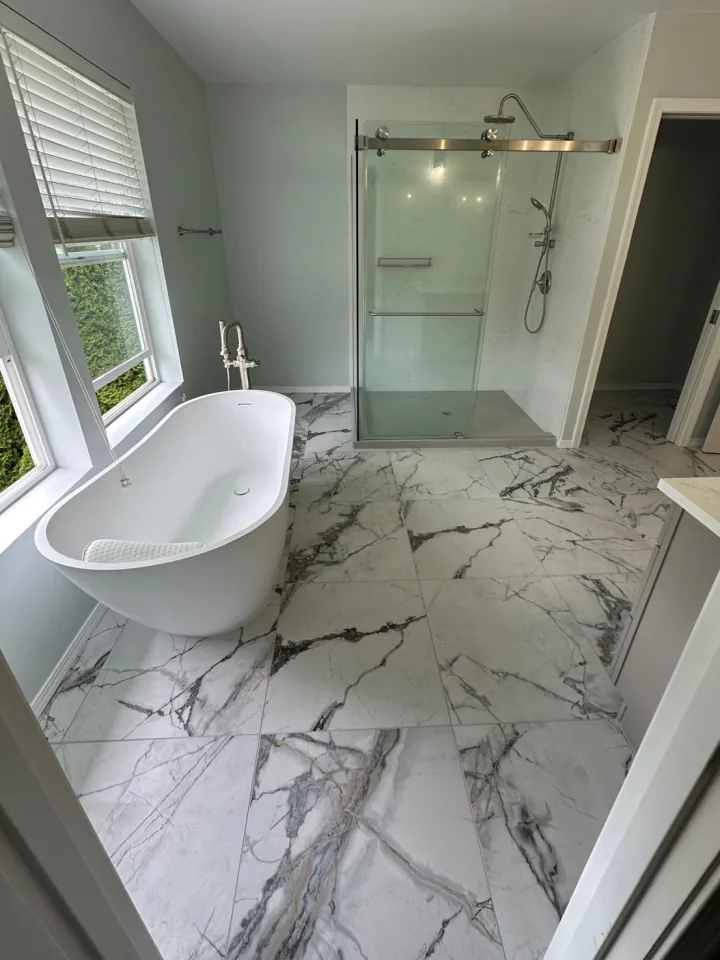
There are four main ways to make a tub or shower easier and safer to use. Add grab bars, a seat and a handheld shower to what you have. Replace the tub with a low-threshold shower you can step into. Put in a roll-in shower with no curb for a wheelchair or shower chair. Or choose a walk-in tub with a door. Which one fits depends on who is bathing, whether they use a wheelchair or walker, and whether they would rather shower or soak.
| Option | Best for | What changes |
|---|---|---|
| Grab bars, seat and handheld shower | People who can still step into the tub but want more support | Add-ons only; the tub or shower stays |
| Low-threshold shower | People who walk but find the tub wall hard to step over | The tub comes out and a shower with a low lip goes in |
| Roll-in shower | People who bathe in a wheelchair or rolling shower chair | A shower with no curb and room to roll in |
| Walk-in tub | People who want to soak sitting up | A tub with a watertight door and a built-in seat |
Add-ons for the tub or shower you have
If getting in is still manageable, start with support. Grab bars by the entry and on the back wall give you something solid to hold. A fold-down or built-in seat lets you shower sitting down. A handheld shower on a slide bar puts the water where you need it. These are the smallest change, and they make the biggest difference on a wet floor.
Low-threshold shower
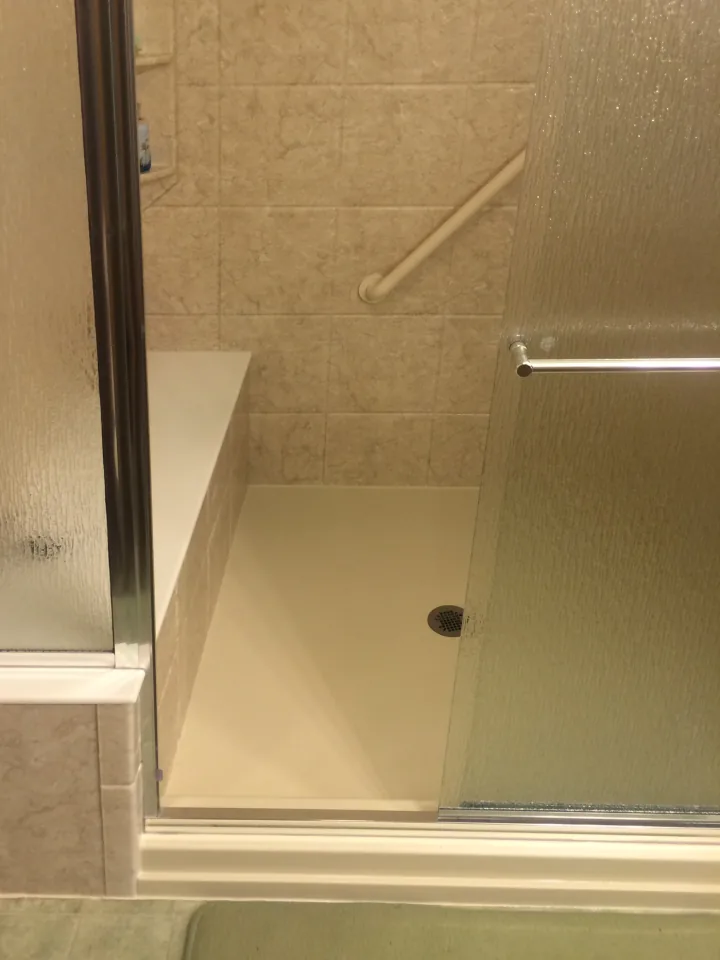
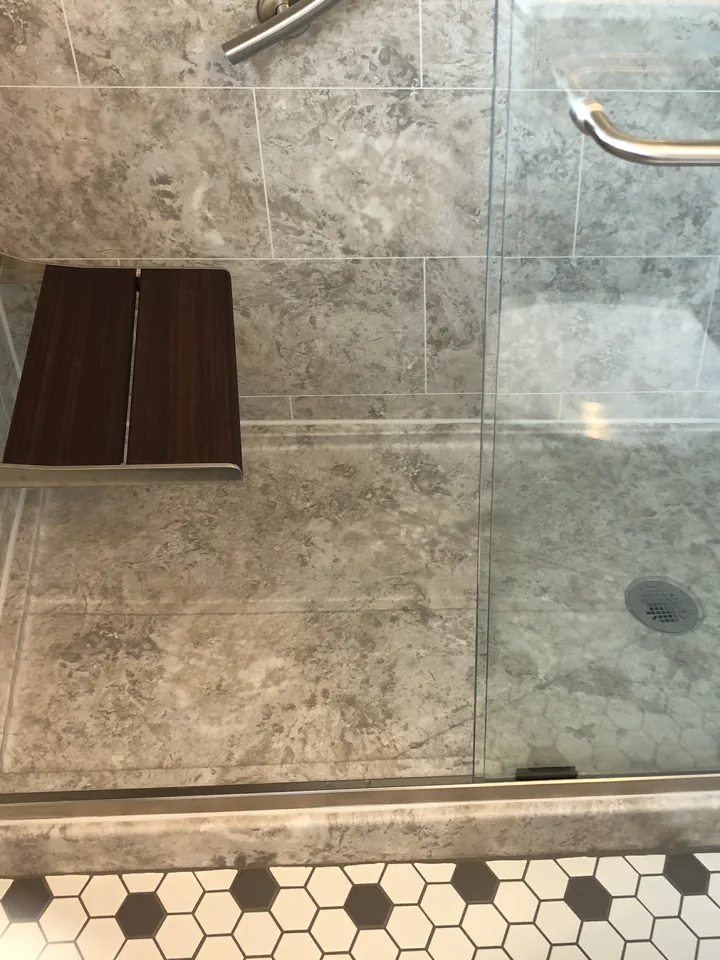
For most people who struggle with the tub wall, replacing the tub with a low-threshold shower solves the problem. You step over a low lip instead of a tub wall, and you can add a seat and grab bars at the same time. It fits in the space your tub takes up now. This is what most tub to shower conversions look like.
Roll-in shower
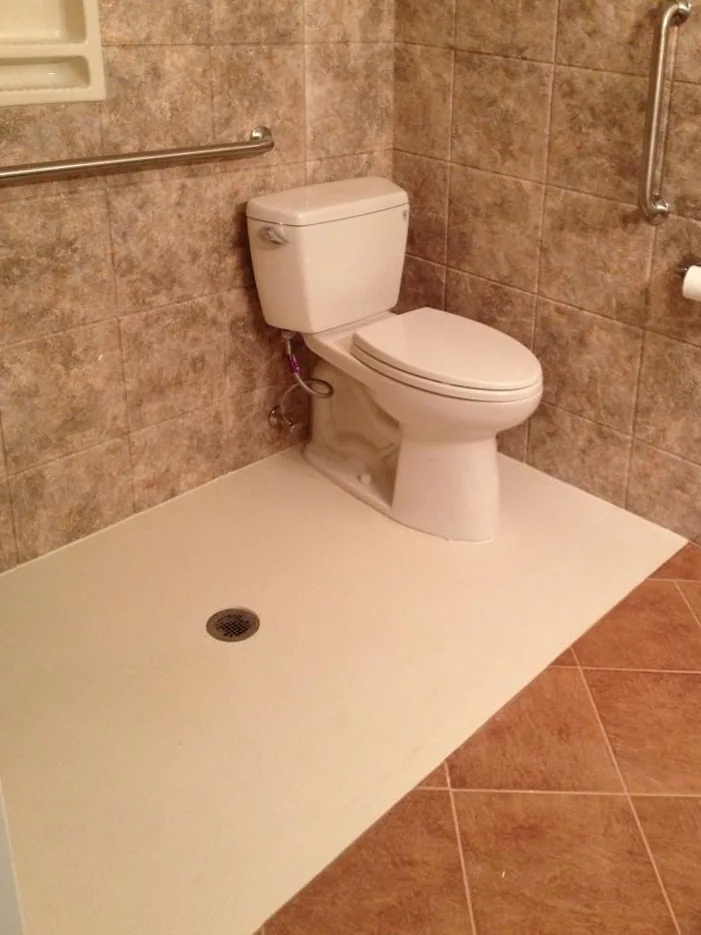
A roll-in shower has no curb at all, so a wheelchair or rolling shower chair goes straight in. Under the ADA standards, a standard roll-in shower is at least 30 by 60 inches with a threshold of 1/2 inch or less. Read what a roll-in shower is for the sizes and features.
Walk-in tub
A walk-in tub has a watertight door and a built-in seat, so you step in over a low threshold and bathe sitting up. You sit while it fills and drains, since the door stays sealed while there's water inside. Most include a handheld shower. Our walk-in shower vs. walk-in tub comparison can help you decide between the two.
Plan before you need it
It's easier to make these changes on your own schedule than in a rush after a fall or a surgery. If you plan to stay in your home, think about who might need the bathroom in five or ten years, and choose a layout that will still work then. A seat and grab bars can always be added later, but the shower floor and entry are the parts you want right the first time.
Frequently asked questions
What is the simplest way to make a bathtub safer?
Add grab bars at the entry and on the back wall, a seat, and a handheld shower. If stepping over the tub wall is the problem, a low-threshold shower is the next step.
Can a bathtub be made accessible without removing it?
Partly. Grab bars, a seat and a handheld shower help a lot. The tub wall stays, so if that is the hard part, the tub needs to be replaced with a shower or a walk-in tub.
Do accessible showers look institutional?
They don't have to. Our showers come in dozens of colors and patterns, so a seat and grab bars can sit in a shower that looks like any other.
How long does an accessible tub or shower take to install?
Most of our tub and shower replacements are installed in as little as one day once the custom parts are made.
We plan and install accessible bathroom remodels across the Seattle area, including roll-in showers and walk-in tubs. A free consultation at home is the best way to see which option fits the person and the space.